

Lesson 16: Image, Caption, Context
Why images are not always the complete story

A photo can often feel like proof, capturing the moment and depicting real people and real places. In news and social media, this is exactly what makes an image so powerful and difficult to argue with.
However, as much as we can interpret them, images do not explain themselves. While a photograph may show us what was visible in one fraction of a second, it usually cannot tell us the full story on its own. That’s why in news stories, and even on our social media, photographs are surrounded by context. They’re cropped to fit proportions, captioned with descriptions, and placed alongside a news story that relates to it. Still, without the captions and surrounding information (who, what, where, when, how, and why), pictures alone may struggle to answer some journalistic questions.
When students think of visual misinformation, they may think of edited photos, deepfakes, or AI-generated images. These are incredibly important problems. Yet, one common form of visual misinformation is a real photo paired with misleading context! This lesson goes beyond doctored or manipulated images and discusses how the caption, crop, and context of a real image can also mislead.
Essential Question: How can real images mislead people?
What story is this image being used to tell?
What information would I need before believing that story?
Objectives:
Explain how captions influence interpretation
Identify what information is missing from an image alone
Distinguish between what they can observe and what they can infer
Ask stronger verification questions before trusting or sharing visual media
Further Learning: Check out the Statistical Sleuths lesson to see how numbers and figures can mislead!
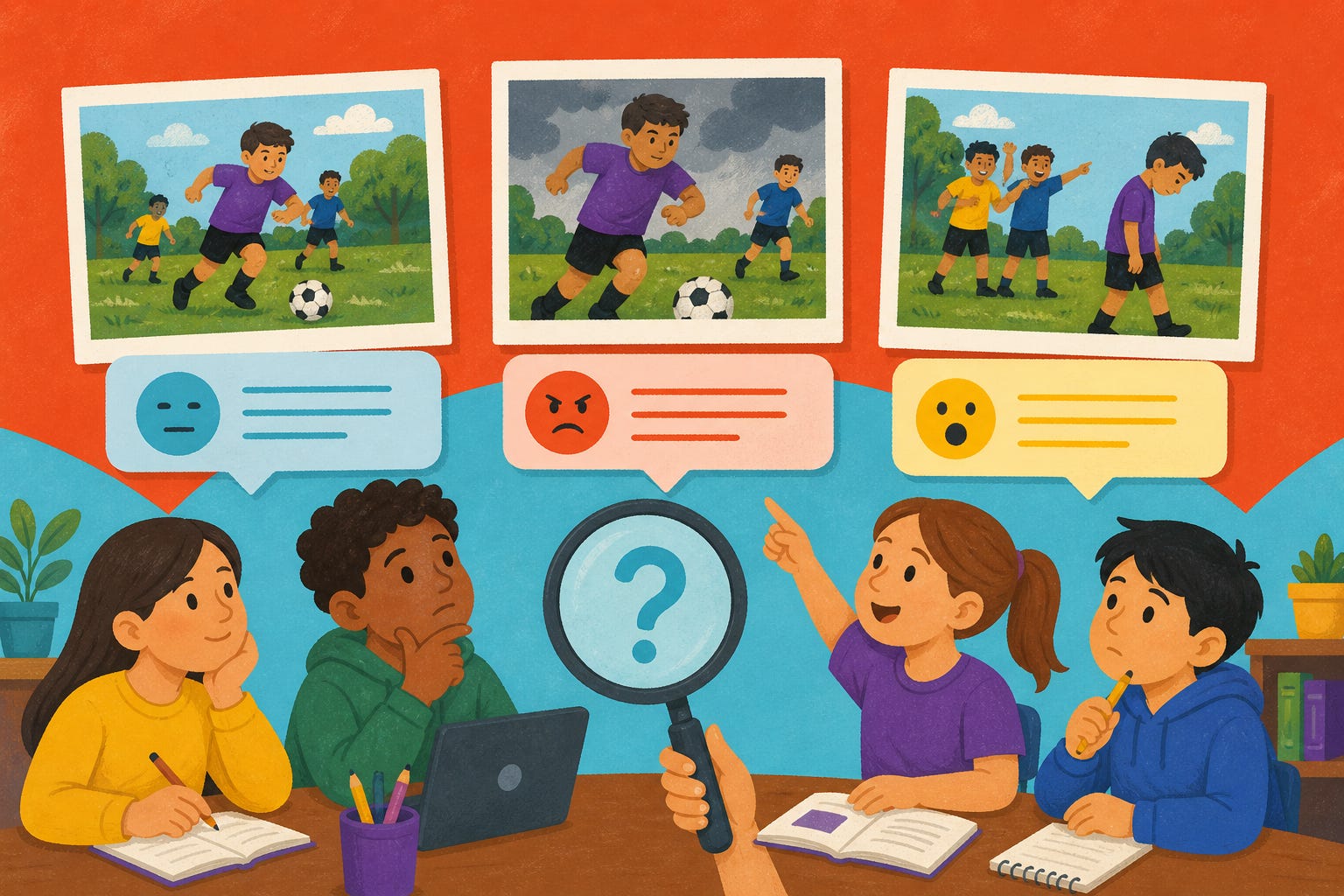
Warm-Up: What Can You Actually Know?
Show students a photo without a caption. Choose an image that is interesting but not too graphic or politically overwhelming. It could show a crowd, a protest, a public official, a weather event, a classroom, a sports moment, or a person reacting emotionally.
Ask students to write down answers to four questions:
What do you notice?
What do you think is happening?
What can you know from the image alone?
What are you assuming?
Then invite students to share their answers. As they respond, separate their answers into two columns:
Observation: What we can see
“A person is crying.”
“Police are present.”
Inference: What we think it means
“They are sad because…”
“Something dangerous happened…”
The goal is not to tell students that their interpretations are wrong. The goal is to help them notice that interpretation begins almost immediately.
Then reveal three possible captions for the same image:
A neutral caption
A dramatic or emotional caption
A misleading or incomplete caption
Ask:
Which caption changed how you understood the image?
Which words shaped your reaction?
What information would you need before trusting the caption?
What might be outside the frame?
Mini-Lesson: Images Do Not Speak for Themselves
A useful way to introduce the lesson is with this line: Photos show us something. Captions tell us what we think we are seeing. Context helps us decide whether that interpretation is fair.
Captions are powerful because many people look at the image and caption before reading the full article. The News Manual notes that readers often look first at headlines and pictures, then read the caption, and only afterward read the full story if they are still interested. That means captions need to make sense on their own.
But captions can also create problems. If the caption is wrong, incomplete, or emotionally loaded, the image may push people toward a misleading conclusion.
Real-Life Situation 1: The Wrong Person
Sometimes the image is real, but the caption identifies the wrong person.
This can sound like a small mistake, but it can cause serious harm. A useful example is this Medium Article discussing the miscaptioning of Black people in the news.
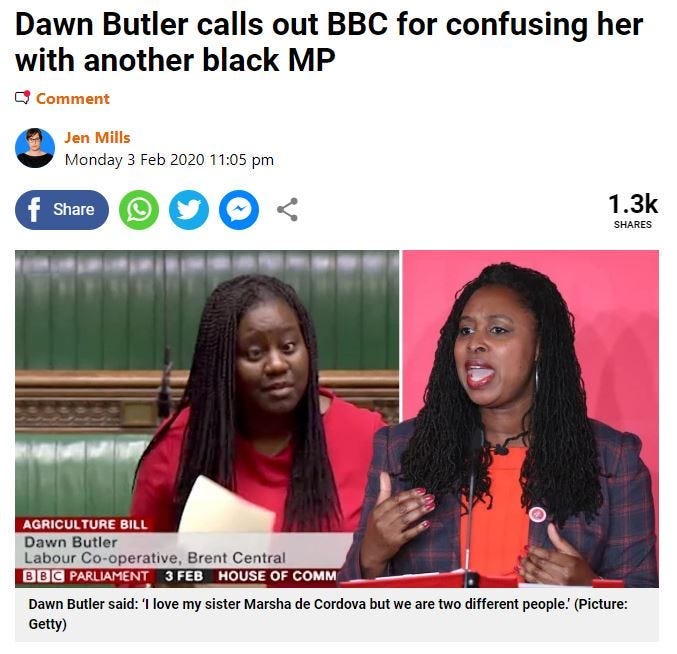
This situation teaches students that caption accuracy is not just a technical issue. It is also about respect, representation, and newsroom responsibility.
Discussion Questions
What harm can come from identifying the wrong person in a caption?
Why might miscaptioning happen more often to people from underrepresented groups?
What should a newsroom do before publishing an image of a person?
Why does “check the caption” matter as much as “check the article”?
Student Task
Give students a fictional scenario: A news outlet publishes a photo of a student athlete, but accidentally names another student in the caption. The story is about a cheating scandal.
Ask students:
Who could be harmed?
How should the outlet correct the mistake?
What could have prevented it?
Real-Life Situation 2: The Image Is Real, But the Date Is Wrong
A real image can become misleading when it is shared as if it happened recently.
Here’s a CBS/AP article reporting that photos taken in 2014 during the Obama administration were used in 2018 to show the immediate effects of the Trump administration’s immigration policy.
You can tell your students: In 2018, photos of migrant children in steel cages circulated online, as if depicting current events. CBS/AP reported that the photos were actually taken in 2014, during the Obama administration, at a Customs and Border Protection facility in Nogales, Arizona.
The images were real. The conditions shown were real. But the date changed the political meaning people attached to them.
Discussion Questions
How does changing the date change the story?
Why might people share an old photo during a current controversy?
Does an old image become misinformation if it shows a real issue?
What should someone check before reposting a dramatic image?
Student Task
Show students two possible captions:
Caption A:
“Migrant children held in steel cages under Trump’s immigration policy.”Caption B:
“Migrant children held at a Customs and Border Protection facility in Arizona in 2014.”
Ask:
Which caption is more precise?
What changes between Caption A and Caption B?
What information would you need to evaluate either caption?
Real-Life Situation 3: The Wrong Event or Place
A real image can also mislead when it is attached to the wrong conflict, disaster, protest, or country.
In 2012, the BBC mistakenly used a 2003 photo from Iraq in a story about the Houla massacre in Syria. The photo was removed after the original photographer identified the error, and the BBC later acknowledged that its checks before publication should have been better.
This example is especially useful for older students because it shows how difficult verification can be during war or breaking news. Images often circulate quickly, sometimes from activists or unofficial sources, and newsrooms may feel pressure to publish before fully verifying them.
Discussion Questions
Why are images from wars and disasters especially vulnerable to being reused out of context?
What should a newsroom verify before publishing an image from social media?
Is a label like “cannot be independently verified” enough?
How could one wrong image change public understanding of a conflict?
Teacher Note
This example may involve graphic imagery. For younger students, discuss the case without showing the photo.
Real-Life Situation 4: Composite Images and False Impressions
Sometimes the issue is not only the caption, but the way images are arranged or altered.
In 2020, The Seattle Times reported that Fox News used misleading images in coverage of Seattle’s Capitol Hill protest zone. One image combined photos from different days, including a photo of an armed man and images of smashed windows. Another image used in Seattle protest coverage showed a burning scene from St. Paul, Minnesota, not Seattle. Fox later removed the images and added an editor’s note.
This example shows that even when individual image elements are real, combining them can create a scene that did not exist in that form.
Discussion Questions
When does a photo illustration become misleading?
Should news organizations be allowed to combine images? Under what conditions?
How does an image of fire, weapons, or broken glass shape a reader’s emotional reaction?
What should a caption or label explain when an image has been edited or combined?
What a Responsible Response Looks Like
We saw in Real-Life Situations three and four that the relevant news organizations published corrections. When a news organization realizes that an image has been used incorrectly, the response matters. A strong correction should do more than quietly remove the image. It should explain what was wrong, what the image actually showed, and how the mistake happened.
A responsible correction might include:
where the image actually came from
when it was taken
why it was originally used
what checks failed or were missing
how the outlet corrected the story
what readers should understand differently now
This is important because visual errors can spread quickly. Even after an image is corrected or removed, many people may still remember the original impression.
For students, this raises an important media literacy question: How should trustworthy sources respond when they get something wrong?
Take a look at Lesson 1: What is Journalism? to see more information on the core standards of responsible journalism!
Additional Discussion Questions
What should a news outlet do when it publishes an image with the wrong context?
Is removing the image enough, or should the outlet explain the mistake?
How can corrections help rebuild trust?
Why might people remember the original image more strongly than the correction?
Main Activity: Caption Detective
Divide students into small groups. Give each group one image-based case study.
Each group answers the following questions:
What can we observe in the image?
What are we inferring?
What does the caption claim?
What context is missing?
What should we verify before trusting it?
How could a different caption change the meaning?
Then ask each group to write three captions for the same image:
1. Neutral Caption
This caption should stick only to confirmed facts.
Example:
“People gather outside a government building during a protest on Monday.”
2. Misleading Caption
This caption should use loaded language, missing context, or an unsupported claim.
Example:
“Angry mob storms government building.”
3. Responsible Caption
This caption should include what is known and what is still uncertain.
Example:
“People gather outside a government building during a protest on Monday. Officials have not confirmed whether the crowd entered the building or remained outside.”
After groups share their captions, ask:
Which caption feels most emotional?
Which caption gives the most evidence?
Which caption would be most responsible for a news outlet to publish?
Which caption would be most likely to go viral?
Verification Checklist: Before You Share an Image
Before trusting or sharing a powerful image, ask:
Who is in the image?
Where was it taken?
When was it taken?
Who took or published it first?
What happened before and after the image?
What might be outside the frame?
Does the caption describe what is visible, or does it add interpretation?
Is the image being used as evidence, a symbol, or emotional persuasion?
Have other reliable sources used the image in the same way?
What would change if the caption were different?
Optional Extension: Caption Rewrite Challenge
Give students a real or fictional photo and ask them to write four captions:
Most neutral caption
Most emotional caption
Most misleading caption
Most responsible caption
Then have students reflect:
Which caption was easiest to write?
Which caption would get the most attention online?
Which caption was fairest to the people in the image?
What does this show about the power of framing?
Exit Ticket
Ask students to answer one of the following:
What is one thing a photo can show clearly?
What is one thing a photo cannot prove by itself?
What is one question you will ask the next time you see a powerful image online?
How can a caption change the meaning of a real image?
Key Takeaway
A real image is not the same as a complete story.
Photos can show us powerful moments, but captions and context shape what those moments mean. When we slow down and ask what we can observe, what we are inferring, and what information is missing, we become better readers of visual media.
The next time an image makes you feel something immediately… pause before sharing it.
Ask:
What am I seeing, what am I being told, and what do I still need to know?