

Lesson 17: From Rumor to Reporting
Students explore how journalists turn raw information into responsible reporting.

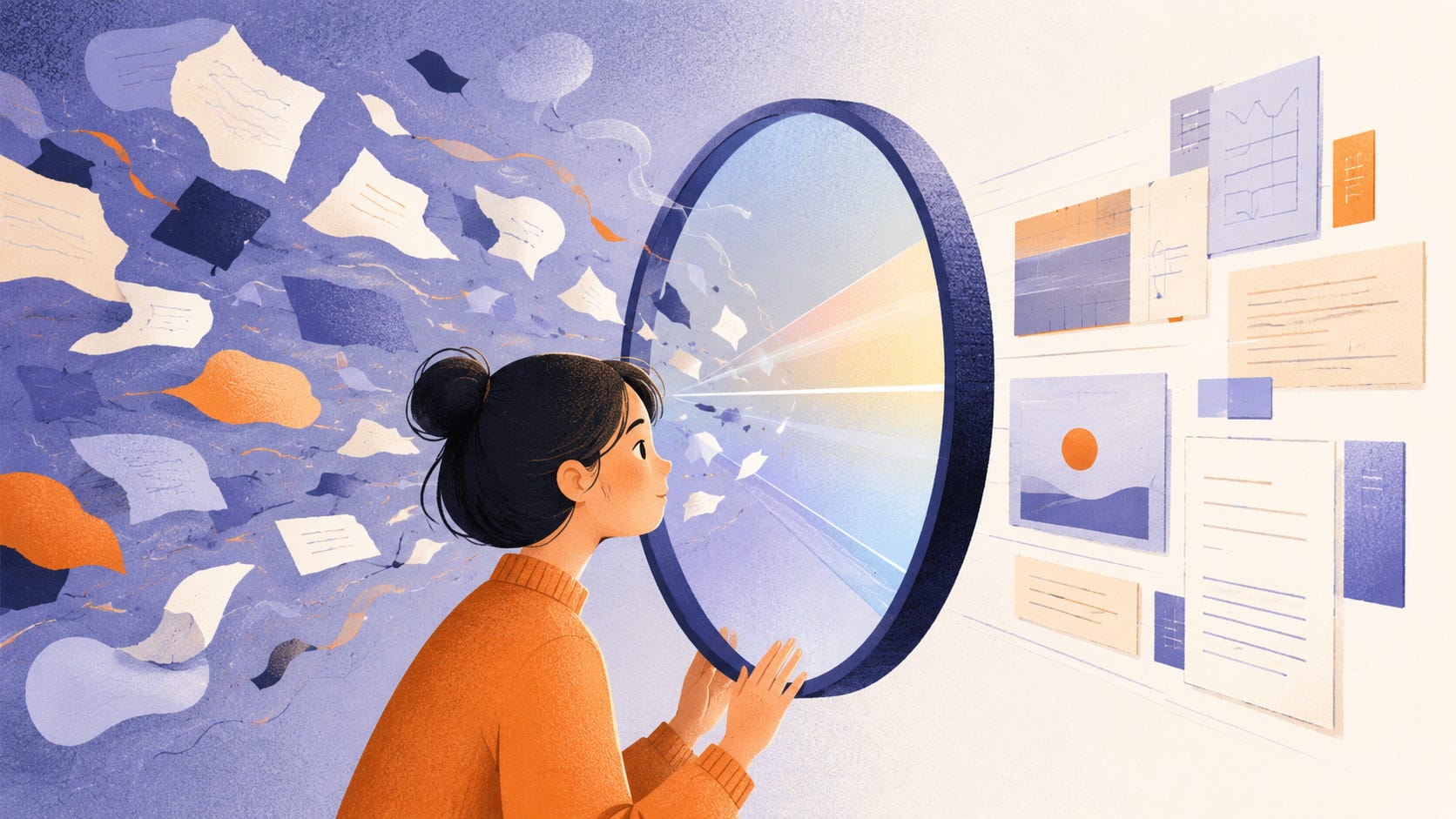
Students often come into class treating news as something that simply appears: a headline, a quote, a video, a chart, or a finished article. If information is published by a news organization, it can feel complete and authoritative. But journalism is not just the act of repeating what someone said or posting what happened. At its best, journalism follows a process: gathering information, checking it, comparing sources, adding context, and making clear what the evidence can actually support.
This lesson gives students a practical way to understand that process. Instead of asking only whether a claim sounds true, students learn to ask how the claim was built: What raw information did the journalist start with? What evidence supports the claim? Is the information primary or secondary? What still needs to be verified? What context is missing? Across the lesson, students explore how journalists move from raw information to responsible reporting.
At the center of the lesson is an essential question: How do journalists use evidence to decide what can responsibly be reported?
The lesson is designed to help students see that evaluating evidence is not just a writing skill. It is also a reading skill, a media-literacy skill, and a civic skill. Students learn that journalists do not simply say whatever they want; they are expected to follow standards of verification, fairness, accuracy, and transparency. They also learn that audiences have a role to play: when we read an article, we can look closely at the evidence a journalist uses and ask whether it actually supports the conclusion being made.
In this lesson, students move from “the article says it, so it must be true” to a more useful question: What evidence supports this claim, and is that evidence strong enough?
Lesson Plan
This week’s package includes:
A full lesson plan
Evidence card activity with teacher notes
Options for scaffolding for younger or less advanced learners
Options for more advanced learners
Extension activities for follow-up practice
Teachers can also connect this lesson to earlier Verity Ed topics, including What Is Journalism?, Statistical Sleuths, and Image, Caption, Context.
We’d love to hear:
What worked well
What felt confusing or too easy
Any examples you want added (middle school vs high school)
Any activities you want adjusted
Your input helps us refine this lesson for future classes.